
Pattern making7 min read
What is pattern making in fashion?
In short
Pattern making is the process of translating a garment design into flat pattern pieces that can be cut from fabric and sewn into a three-dimensional garment. A production-ready pattern contains every piece with its grainline, seam allowances, notches, darts and internal markings, built on a defined base size and measurement chart. It is the technical foundation for fit, sewing, grading and fabric consumption.
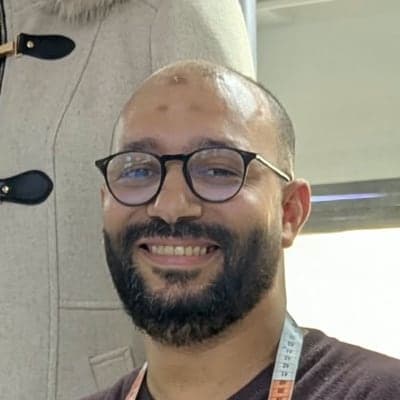
By Youssef Abdessamad, pattern maker and digital pattern specialistPublished on
Pattern making in one sentence, then in detail
A sketch shows what a garment should look like; a pattern defines exactly how it is built. Between the two, a pattern maker makes hundreds of small decisions: how much ease the body needs, where the shoulder seam sits, how deep a dart is, how much the sleeve cap is bigger than the armhole, which way the grain runs. Each of these decisions is invisible on the finished garment, but each one shows up immediately if it is wrong.
- Pattern (garment pattern)
- A set of flat templates, one per garment piece, that carries all the information needed to cut and assemble the garment: outline, seam allowance, grainline, notches, darts, pleats, pocket and buttonhole positions, piece name, size and cutting instructions (for example “cut 2, mirrored”).
In the industry, a pattern is not a drawing. It is a technical document. A sewing operator in a factory will not ask you what you meant; they will match notch to notch and sew what the pattern says. That is why pattern making is as much about communication as it is about shape.
The main methods: drafting, draping and digital
There are three ways to arrive at a pattern, and in real projects they are often combined.
- Flat pattern drafting: the pattern is constructed from measurements and a block (sloper), using rulers and curves on paper or directly in CAD. It is precise, repeatable and ideal for structured garments like shirts, trousers and tailored jackets.
- Draping: fabric is shaped directly on a dress form, marked, then transferred to paper. It is the natural choice for fluid, asymmetric or highly sculptural designs where the volume is easier to find by hand than by calculation.
- Digital pattern making: the pattern is built or modified in CAD software such as Lectra Modaris. The geometry is the same as on paper, but measurements, walking of seams, grading and exports to cutting become faster and more reliable.
In my own work, most new styles start from a tested block and are developed digitally, because it keeps every change traceable. Draping remains useful when a design’s volume cannot be pinned down with numbers alone.
What a production-ready pattern must contain
Clients often send me patterns that look finished but are missing the information a factory needs. A complete pattern set includes:
| Element | What it does | What happens if it is wrong |
|---|---|---|
| Grainline | Aligns the piece with the warp of the fabric | The garment twists, hems drop unevenly, trouser legs spiral after washing |
| Seam allowance | Adds the sewing margin outside the stitch line | Pieces do not match, or operators guess the allowance and the fit changes |
| Notches | Mark matching points between pieces | Sleeves are set with ease in the wrong place, panels shift during sewing |
| Darts and pleats | Shape flat fabric around the body | Bust or seat volume sits in the wrong place |
| Internal markings | Pockets, buttonholes, fold lines, drill holes | Details are placed by eye and vary piece to piece |
| Piece label | Name, size, style reference, cut quantity | Pieces get mixed up across sizes or styles on the cutting table |
The technical decisions that make or break fit
The difference between a pattern that works and one that almost works is usually in a few specific places.
- Ease: a pattern is never cut to body measurements. Wearing ease allows movement; design ease creates the silhouette. The same chest measurement can produce a fitted shirt or an oversized one depending on ease alone, and ease must be adapted to fabric stretch: a knit may need negative ease where a woven needs several centimeters.
- Sleeve cap ease: the sleeve cap is deliberately longer than the armhole so the sleeve can curve over the shoulder. Too little and the sleeve pulls; too much and it puckers. Notches decide where that excess is distributed, so a notch placed a few millimeters off moves the ease to the wrong side of the cap.
- Walking seams: two seams sewn together must be the same length (or have an intentional, controlled difference). I walk every seam, side seam to side seam, armhole to sleeve, waistband to waist, before a pattern leaves my hands.
- Fabric shrinkage: denim, linen and many cottons shrink after washing. If the pattern does not include the measured shrinkage, a trouser that fits at sampling can come out shorter after garment wash.
Where pattern making fits in garment development
- Brief: sketch, references, measurement chart, target fabric and base size.
- First pattern in the base size.
- Prototype (muslin or sample in the real fabric) and fit session.
- Pattern corrections based on the fit comments, then a second sample if needed.
- Approval of the base size, then grading to the full size range.
- Preparation of production files: DXF for cutting systems, markers, plotted or PDF patterns.
Pattern making is therefore not a single step but a loop. The broader technical work around it, sample follow-up, construction choices and tech pack coherence, is garment development; I explain the difference in garment development vs pattern making.
Common mistakes I see in client patterns
- No grainline, or a grainline drawn by eye instead of parallel to center front or back.
- Seam allowances included on some pieces and not others, with nothing written to say which.
- Notches missing on the sleeve cap and armhole, so the cap ease cannot be controlled.
- Seams that do not walk, typically side seams after a waist adjustment.
- Patterns graded before the base size was approved, which multiplies every error across the range.
Working with a pattern maker remotely
Pattern making is well suited to remote collaboration. I work from Morocco with brands and designers across Europe and elsewhere: patterns are delivered digitally, fit sessions happen on the client side with photos, videos and measurements, and corrections are made on the file. If you are preparing a new style, my pattern making service covers the first pattern through to production-ready files, and the guide on how to prepare a brief will help you start with the right information.