
Pattern creation
Garment development, from sketch to approved sample
In short
Garment development is the technical work that turns a design idea into a garment that can be sewn and produced: construction choices, pattern, sample review and corrections. In French this is called modélisme. I handle this process remotely from Morocco for brands and designers who need someone to take a design from sketch or reference garment to an approved production pattern.
By Youssef Abdessamad·Updated on
Pricing
On quote
Free quote, prepared after reviewing your design
- Turnaround
- Depends on complexity, confirmed in the quote
- Delivery
- Digital files, printing on request
- Software
- Lectra, Gerber AccuMark, CLO 3D
In the French tradition, the person who does this work does more than draw patterns. The role covers interpreting the design, choosing how the garment will be constructed, drafting the pattern, reviewing the sample and correcting until the piece is right. In English this is usually split between pattern making and product or garment development; I cover both.
A designer’s sketch rarely contains everything a sewing room needs. Where does the zip go, and what type? Is the waistband cut in one piece or two? Does the lining float or is it bagged out? I make those decisions with you, based on the look you want, the fabric and how the garment will be manufactured.
Development can also include a 3D prototype in CLO 3D before the first physical sample, to review proportions and balance earlier. The difference between the two trades is explained in pattern making vs garment development.
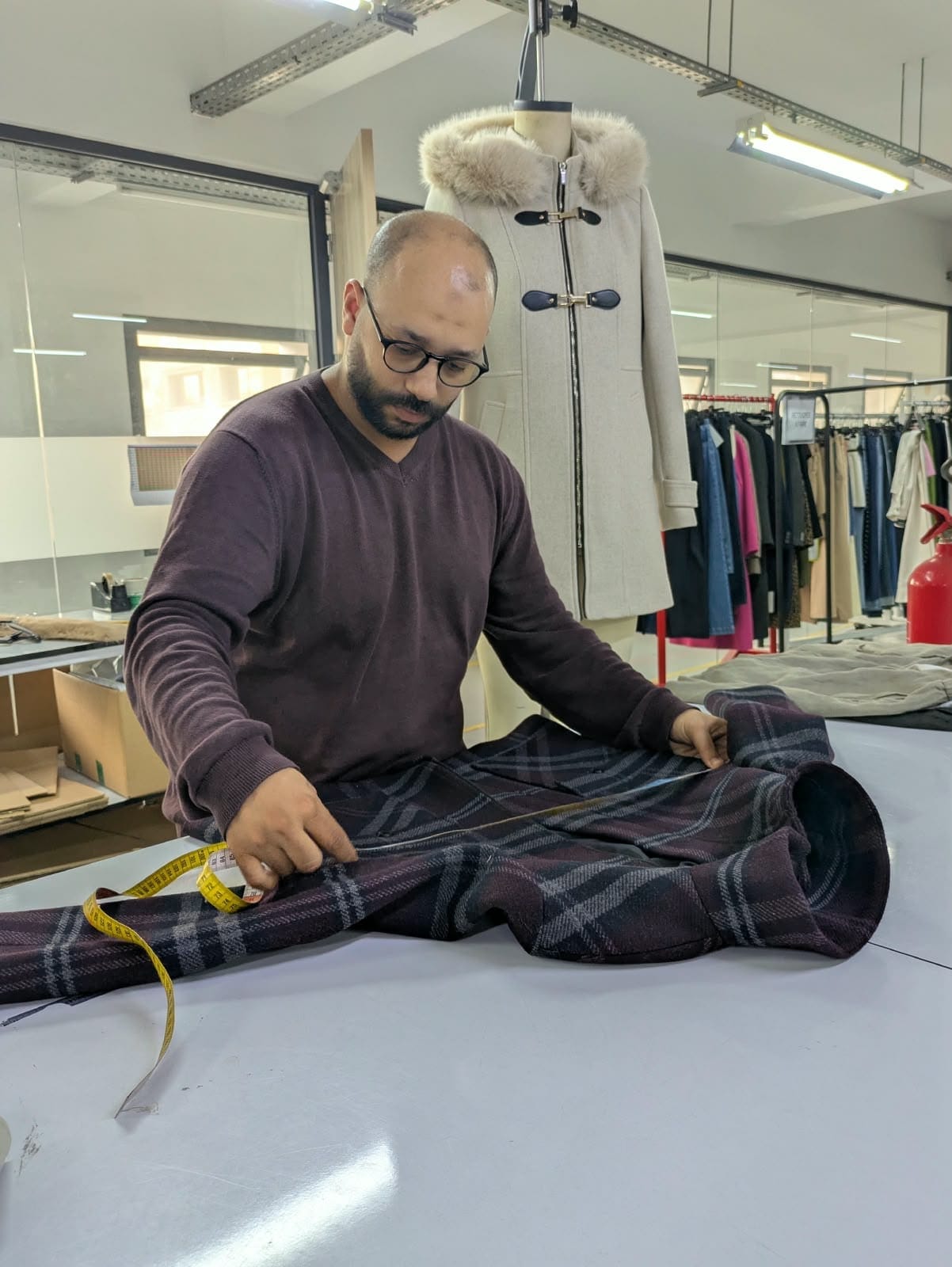
What’s included
Design interpretation
I study the sketch or reference and translate it into proportions, style lines and measurements that match your size chart.
Construction choices
Closures, seam types, facings, linings and interfacing are decided according to the fabric, the look and the production method.
Pattern drafting
A complete pattern in the base size, with all construction marks, ready to cut the first sample.
Sample review
I review your sample from photos, measurements and fit comments, and identify whether each issue comes from the pattern, the fabric or the sewing.
Corrections and validation
The pattern is corrected after each sample round until the design is approved for grading and production.
Technical documentation
Measurement specs, construction notes and piece lists that support your tech pack and help the factory reproduce the garment.
Deliverables
- Approved pattern in the base size
- Construction notes (seam types, closures, finishes)
- Measurement specification for the base size
- Pattern correction history between sample rounds
- Digital files in the agreed format
- Optional 3D preview in CLO 3D
Who it’s for
- Fashion designers without an in-house technical team
- Brands launching a new product category
- Fashion startups building a first collection
- E-commerce brands developing private-label styles
- Garment manufacturers needing development support
- Workshops developing designs for their clients
How it works
- 1
Design review
We go through the sketch, references, target fabric, size range and production context.
- 2
Technical choices
I propose construction options and confirm the key measurements before drafting.
- 3
Pattern and first sample
I draft the pattern; the first sample is sewn by your workshop or a sample room of your choice.
- 4
Fit review
You send photos on a model or form, measurements and comments. I analyze what needs to change and why.
- 5
Corrections
I correct the pattern, and a second sample confirms the changes if needed.
- 6
Handover for production
The approved pattern is ready for grading and delivered with its documentation.
Reading a sample: pattern fault, fabric issue or sewing issue?
When a sample does not look right, the first job is diagnosis. Drag lines that point from the bust toward the armhole usually mean the armhole or the bust shaping needs attention; a hem that swings forward on a skirt often points to a balance issue between front and back at the side seam. These are pattern corrections.
Other issues come from the fabric. A seam that puckers on a lightweight polyester may be a stitch tension or needle problem, not a pattern problem. A knit top that grows in length after a few wears may need a different fabric or stabilized shoulder seams rather than a shorter pattern. Changing the pattern to fix a sewing problem just creates a new problem.
This is why I ask for photos from front, side and back, on a body or form, together with measurements taken on the sample. Comparing the sewn sample to the spec tells me whether the pattern was followed and where the gap really is.
- Balance
- The relationship between front and back lengths at the side seams and shoulders. Poor balance makes hems swing and side seams pull toward the front or back.
- Muslin (test garment)
- A trial version of the garment in inexpensive fabric used to check fit and proportions before cutting the final fabric.
- Tolerances
- The accepted difference between the spec measurement and the sewn garment. They tell the factory what counts as a pass or a fail.
- Tech pack
- The technical file for a style: flat sketches, measurements, materials and construction details. The pattern and the tech pack must agree.
What slows down a development
Sampling in a substitute fabric that behaves differently from the production fabric.
Giving fit feedback without photos or measurements, which forces guesswork on the correction.
Changing the design between sample rounds, which restarts part of the development.
Skipping the approved-sample step and going straight to grading and bulk production.
Delivery formats
- DXF-AAMAPattern exchange between textile CAD systems (Lectra, CLO 3D, Gerber, Optitex…).
- Full-scale PDFPrinting on a wide-format plotter or on tiled sheets, and technical documentation.
- PLT / HPGLDirect output to a workshop plotter.
Available formats depend on the software used and the project requirements.
Pricing
Pricing
On quote
Free quote, prepared after reviewing your design
Priced on a free quote, based on complexity, the number of pieces, the number of sample rounds and any 3D work. See pricing.
Frequently asked questions
What is the difference between pattern making and garment development?
Do you sew the samples?
How many sample rounds should I expect?
Can development be done entirely remotely?
Can 3D replace some of the samples?
Related services
- Pattern makingProduction-ready garment patterns built from your sketch, tech pack or sample, with every construction mark in place.
- Pattern correctionDiagnosis and correction of patterns that fit badly or cause problems at the sewing stage.
- CLO 3DVirtual prototypes built on real patterns, for reviewing fit and proportions before the physical sample.
Further reading
Garment development vs pattern making: what is the difference?
In French fashion workshops, garment development and pattern making are not the same job. Understanding the difference helps you ask for the right service.
Read articleHow to prepare a brief for a pattern maker
A clear brief is the cheapest way to reduce sample rounds. This is the checklist I wish every client used before sending a project.
Read article
Tell me about your project.
Send your references and technical requirements. Every project is assessed according to its level of complexity.