
Digital
Lectra pattern work: drafting, grading and file preparation
In short
I carry out pattern work in Lectra for brands and factories: drafting, modifications, grading, digitizing and preparing files for plotting and marker making. Files are delivered in native format when you use the same software, or as DXF-AAMA, DXF-ASTM, PLT or PDF. It is a remote service from Morocco, available to clients in Europe and beyond.
By Youssef Abdessamad·Updated on
Pricing
On quote
Free quote, prepared after reviewing your design
- Turnaround
- Depends on complexity, confirmed in the quote
- Delivery
- Digital files, printing on request
- Software
- Lectra
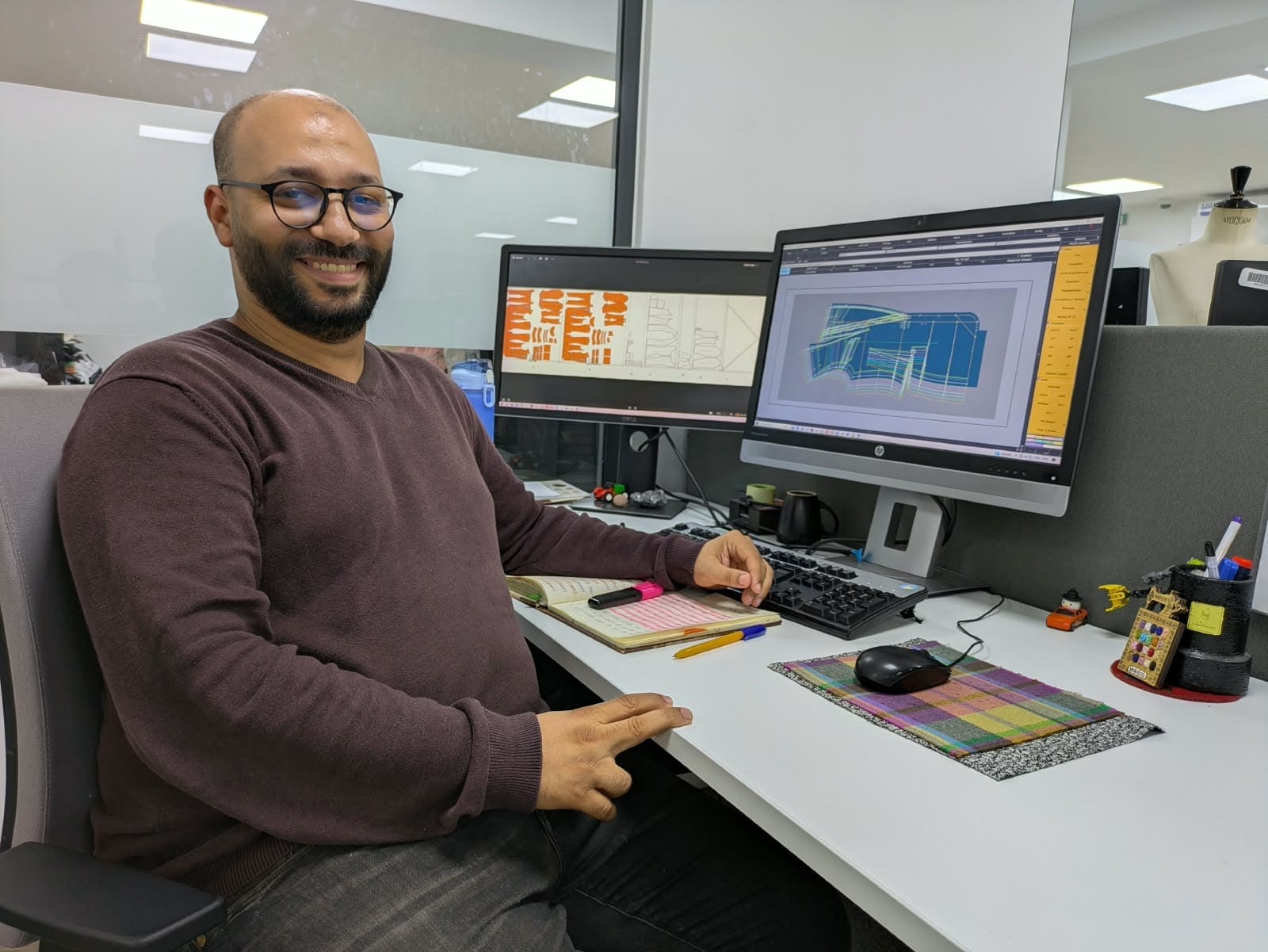
Many factories and brands already work with Lectra and need someone who can deliver files that slot directly into their system. I work in Lectra for pattern drafting and grading, and prepare files so your team can plot, place and cut without rework.
This page is about the service: what you get and how it works. For how I use the software itself, including Modaris and Diamino, see my Lectra expertise page.
Typical jobs include drafting new styles, modifying existing patterns, grading, digitizing paper patterns and cleaning files received from other systems before they go to production.
What’s included
Pattern drafting in Lectra
New patterns drafted directly in the software, with all construction marks and piece information.
Pattern modifications
Changes to existing Lectra patterns: fit adjustments, style changes, new variants from a block.
Grading
Grade rules built on your size chart, with nest and seam checks in every size.
Digitizing
Paper patterns converted into Lectra pieces, cleaned and checked.
File preparation
Piece naming, cut quantities, fabric codes and export settings prepared for plotting or marker making.
Format conversion
Import and cleanup of DXF files from other CAD systems. Results depend on the source file and software.
Deliverables
- Pattern files in native format or DXF-AAMA / DXF-ASTM
- PLT files for plotting when needed
- PDF overview of pieces and sizes
- Graded measurement table (for grading jobs)
- Piece list with cut quantities and fabric codes
Who it’s for
- Garment factories using Lectra
- Brands whose manufacturers work in Lectra
- Workshops outsourcing grading or file preparation
- Designers needing Lectra-compatible files
- Manufacturers with peak workload in pattern rooms
How it works
- 1
Brief and file check
You send the design or existing files, plus your naming and export requirements.
- 2
Quote
I confirm scope, formats and estimated turnaround.
- 3
Work in Lectra
Drafting, modification, grading or digitizing as agreed.
- 4
Checks
Seam lengths, notches, grade nest and piece information are checked.
- 5
Export and delivery
Files are exported in the agreed format and delivered with a PDF overview.
Preparing Lectra files that production can use directly
A pattern can be technically correct and still slow down production if the file is not prepared for the next step. Marker making needs every piece to carry its cut quantity, fabric, grainline and any restrictions, for example pieces that must not be flipped on a one-way fabric or napped velvet. Missing information means someone at the factory has to add it by hand.
Naming matters more than it seems. When a style has fifty pieces across shell, lining and interfacing, consistent names and fabric codes make it possible to generate markers per fabric without mistakes. I follow your naming convention if you have one, or propose a clear one.
When files come from another CAD system, I check what survived the import: notches, internal lines, grade rules and curve quality. DXF exchange works well in general, but each software reads it slightly differently, so a check before production avoids surprises.
- Modaris
- Lectra’s pattern making and grading software.
- Diamino
- Lectra’s marker making (nesting) software, used to place pieces on the fabric and estimate consumption.
- Fabric consumption
- The fabric length needed per garment, calculated from the marker. It depends on the pattern, the fabric width and placement constraints.
- Nap and one-way fabrics
- Fabrics where all pieces must face the same direction, which constrains placement and increases consumption.
To avoid back-and-forth on Lectra files
Tell me which export your factory expects: native file, DXF-AAMA, DXF-ASTM or PLT.
Share your piece naming and fabric code conventions before work starts.
Specify whether seam allowances must be included in the delivered pieces.
Mention fabric constraints (nap, stripes, checks) that affect placement.
Delivery formats
- DXF-AAMAPattern exchange between textile CAD systems (Lectra, CLO 3D, Gerber, Optitex…).
- DXF-ASTMStandardized variant (ASTM D6673) used by some manufacturers and software.
- PLT / HPGLDirect output to a workshop plotter.
- Full-scale PDFPrinting on a wide-format plotter or on tiled sheets, and technical documentation.
- Professional software formatsFiles tied to the Lectra environment or to other professional software.
Available formats depend on the software used and the project requirements.
Pricing
Pricing
On quote
Free quote, prepared after reviewing your design
Priced on a free quote, based on the type of job (drafting, grading, digitizing or file preparation), the number of pieces and the number of sizes. See pricing.
Frequently asked questions
Can you send native Lectra files?
Do you also make markers?
Can you work on files from another CAD system?
Are you a Lectra partner?
Related services
- Digital pattern makingGarment patterns drafted directly in CAD, ready to grade, plot and share with any factory.
- Pattern gradingEvery size in your range, graded from your approved base pattern with rules built on your size chart.
- Pattern digitizingYour paper patterns turned into clean, checked CAD files ready for grading, plotting and production.
Further reading
What is Lectra used for in pattern making?
Lectra is one of the established CAD suites in the garment industry. This is what it actually does in a pattern maker’s daily work, from first pattern to marker.
Read articleWhat is a DXF pattern file? AAMA vs ASTM explained
DXF is the common language between pattern CAD systems, but not every DXF is a pattern file. Here is what AAMA and ASTM variants contain and how to avoid import problems.
Read article
Tell me about your project.
Send your references and technical requirements. Every project is assessed according to its level of complexity.